





Towing Capacity vs Payload
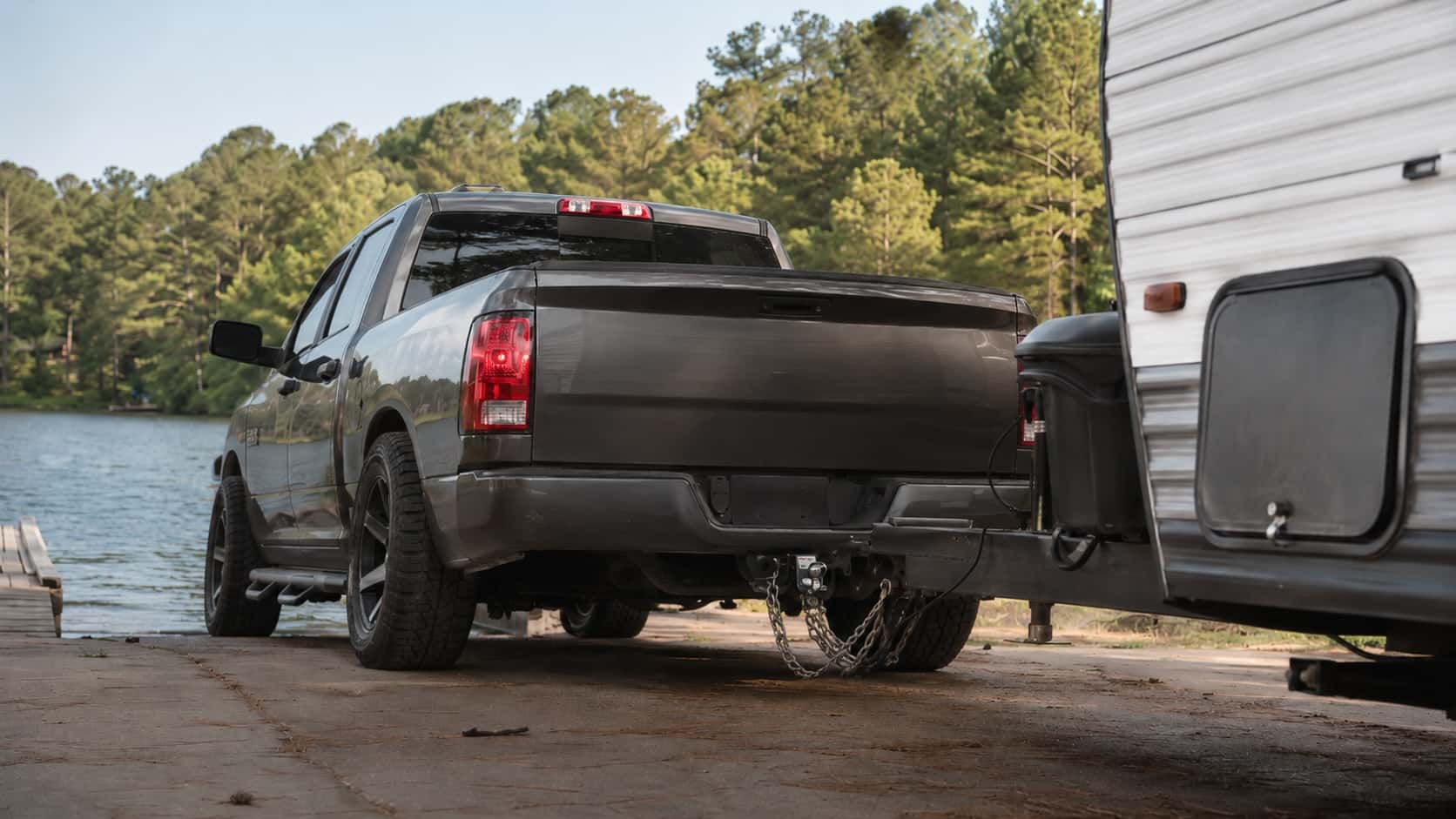
Every summer we get the same conversation on the lot. Somebody bought a camper, checked the tow rating on their half ton, and the math looked fine. Then the truck starts acting wrong on the way to Toledo Bend and they cannot figure out why.
The tow rating was never the problem. Payload was.
The number almost nobody asks about
Hebert’s has been selling vehicles in Shreveport for 45 years, and the answer from our truck team is the same every time. The mistake customers make most often is assuming the truck can carry more weight than it actually can.
Tow rating is how much the truck can pull behind it. Payload is how much weight the truck can carry, and that includes everything sitting in the cab and the bed, plus the part of the trailer that presses down on the hitch.
Almost every customer asks about tow rating. Almost nobody asks about payload. That gap is where people get in trouble.
Where the weight actually goes
A trailer does not float behind your truck. Part of it rides on your truck, and that part counts against payload just like a passenger or a toolbox does.
For a bumper pull travel trailer, industry standard puts tongue weight between 10 and 15 percent of the loaded trailer weight. For a fifth wheel or gooseneck, the pin carries more, generally 15 to 25 percent, with 20 percent being the number most people plan around.
Then add the hardware. A weight distributing hitch runs roughly 80 to 120 pounds. A fifth wheel hitch is heavier, usually 180 to 250 pounds. That weight is in your truck too.
Run your own numbers
Here is what it looks like for a family headed to Cross Lake for the weekend with a mid size camper.
| Tongue weight at 13% | 975 lb |
|---|---|
| Weight distributing hitch | 100 lb |
| Driver and passenger | 350 lb |
| Two kids in the back | 150 lb |
| Coolers, chairs, gear | 150 lb |
| Total against payload | 1,725 lb |
A typical half ton carries somewhere around 1,650 pounds of payload. This family is over before they back out of the driveway, and they never got anywhere near the tow rating.
What we ask before we put you in anything
Four questions, every time:
- What are you towing?
- How much does it weigh?
- Where are you taking it?
- Is this for work or personal use?
The last one matters more than people expect. A boat that goes to Lake Bistineau six Saturdays a summer is a different problem than a trailer that runs I-20 loaded five days a week.
When somebody walks in already saying they need a 2500, they are usually right. People tend to know when they have outgrown a truck. They just want somebody to confirm it before they spend the money.
The signs you already outgrew your half ton
Transmission trouble is what shows up first. A half ton run consistently near or over its limits puts heat and load through the transmission that it was not built to take, and that bill lands long before anything dramatic happens on the road.
Heavy tongue or pin weight also overloads the rear axle before it does anything else. If your truck squats hard when you hook up, that is not a suspension problem to solve with air bags. Air bags level the truck. They do not raise payload.
If you are weighing the jump, we broke down the difference in detail here: Ram 1500 vs 2500, which truck do you need.
The brake controller nobody plans for
Ask anyone in our service drive what surprises people at the install and the answer is the brake controller.
Customers budget for the hitch and stop there. But anything with its own electric brakes needs a controller in the truck to run them, and Louisiana law and basic physics both agree you want it. It is a small part that turns into a bad phone call when somebody shows up at 7 a.m. on a Friday expecting to leave for the lake by nine.
Our parts and service departments install both in house, on Mopar hardware. That matters more than it sounds like it does. If something goes wrong down the road you are dealing with the same people who put it on, not an aftermarket shop that has your truck for a week.
Call parts with your trailer details and we will quote the hitch and the controller together, so there is no surprise at the counter.
Schedule a service appointment or call parts directly at 318-666-2011.
Before you come in, look up one thing
Find out how much your camper or boat actually weighs. Not the dry weight on the brochure, the loaded weight, or at minimum the GVWR on the trailer’s own sticker. Dry weight does not include water, propane, food, gear, or anything else you are bringing.
Bring that number and the payload figure off your door jamb, and we can tell you in about five minutes whether the truck you have is the truck you need.
Common questions
What is the difference between towing capacity and payload?
Towing capacity is how much weight the truck can pull behind it. Payload is how much weight the truck can carry, including passengers, cargo, the hitch, and the portion of the trailer that rests on the hitch. You can be well under your tow rating and still be over payload.
Where do I find my truck’s payload capacity?
On the yellow sticker inside the driver’s door jamb. It gives the combined weight of occupants and cargo your specific truck can carry. Brochure figures are for a base configuration and are usually higher than what your truck actually allows.
How much of my camper’s weight lands on the truck?
For a bumper pull travel trailer, plan on 10 to 15 percent of the loaded trailer weight sitting on the hitch. For a fifth wheel, plan on 15 to 25 percent, with 20 percent as a working number. Add the hitch hardware weight on top of that.
Do I need a brake controller?
If your trailer has electric brakes, yes. The controller lives in the truck and operates the trailer’s brakes with yours. We install them in house alongside hitch work.
When should I move up from a Ram 1500 to a 2500?
When the payload math does not work, not when the tow rating runs out. If your loaded tongue or pin weight plus passengers and gear exceeds what the door sticker allows, a heavier truck is the fix. Most customers who suspect they need a 2500 turn out to be right.
Bring us your numbers. Our truck team is at 1155 East Bert Kouns Industrial Loop in Shreveport.
Shop new Ram 2500
Shop new Ram 1500
Sales 318-703-2953 · Service 318-230-7370 · Parts 318-666-2011


0 comment(s) so far on Towing Capacity vs Payload